
AI, IoT and Data-Driven Moves: The Future of Office Relocation
AI, IoT and data are reshaping office relocations with smarter planning, efficiency and sustainability.
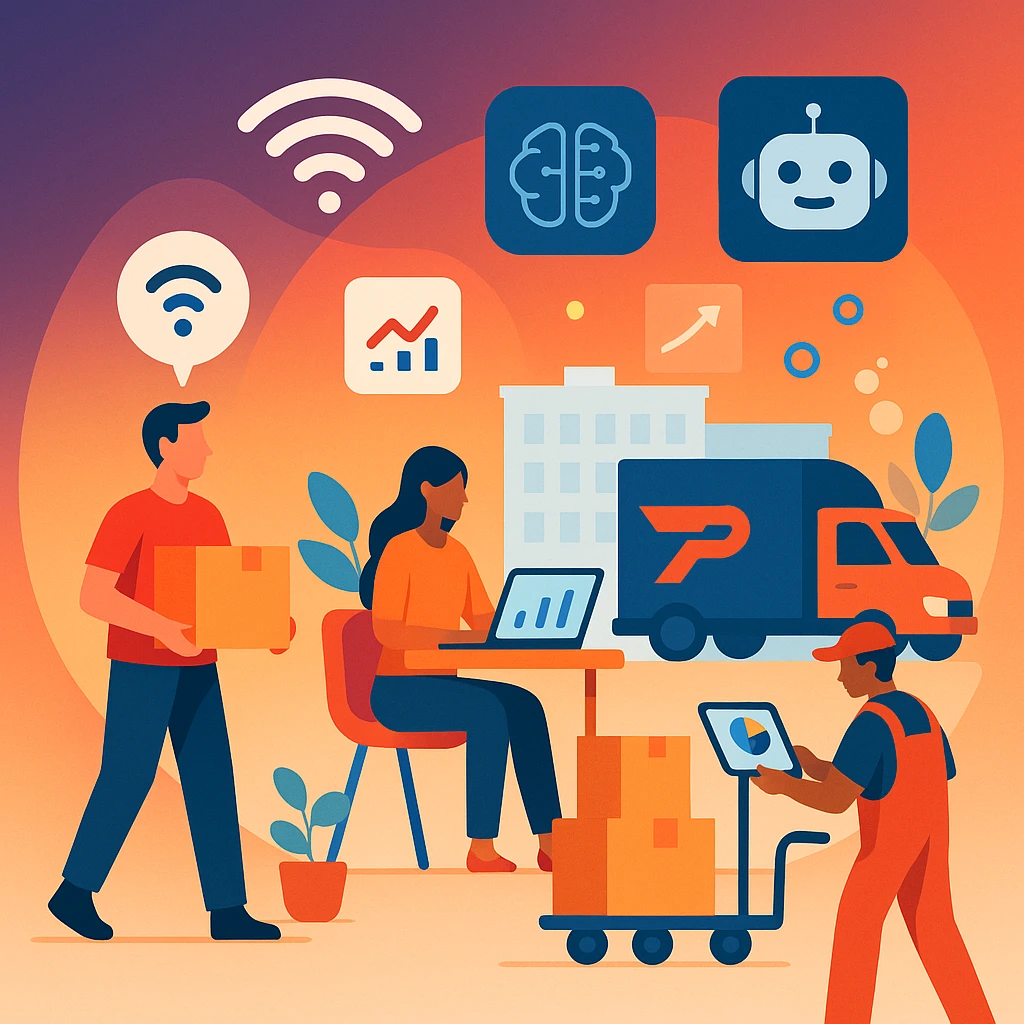
Relocating an office has always been a complex task, balancing time, cost and employee well-being. Today, however, technology is redefining how companies approach these challenges. Artificial Intelligence (AI), the Internet of Things (IoT) and data analytics are transforming corporate moves from stressful transitions into streamlined, sustainable strategies. Businesses that embrace these innovations will not only save money but also create workspaces that meet the demands of a digital-first world.
Smarter Planning with Artificial Intelligence
AI is enabling companies to predict potential challenges before they arise. Algorithms can analyze floorplans, employee workflows, and even traffic patterns to create optimal relocation strategies. Instead of relying solely on traditional planning, companies now benefit from scenario simulations, cost predictions, and time-saving insights. This reduces downtime and increases overall project efficiency.
Such predictive approaches go hand in hand with sustainability. As our blog on ESG and sustainable moving highlights, future-focused relocations are not just about logistics—they must also reflect environmental responsibility. AI helps businesses minimize waste by suggesting better resource allocation and eco-friendly materials.
IoT for Real-Time Tracking and Efficiency
The IoT has brought unprecedented visibility to office relocations. Smart sensors and connected devices allow companies to track the movement of furniture, equipment, and even sensitive IT assets in real time. This means fewer losses, better scheduling, and more accurate reporting.
In practice, IoT tools also support asset reuse. When organizations track their office furniture lifecycle, they can make informed decisions about donation or recycling. This is in line with our guide on furniture donations to foundations, showing how technology can bridge efficiency with social responsibility.
Data-Driven Decisions for Sustainable Outcomes
Every office move generates enormous amounts of data—from employee surveys to energy use. By capturing and analyzing this information, companies can uncover insights that make relocations not only smoother but also more strategic. For example, data can reveal which departments need flexible spaces or whether hybrid work models reduce office size requirements.
This approach aligns with the idea of “beyond moving,” as explored in our post on surplus furniture disposal. Data allows companies to make transparent, responsible choices about what stays, what goes, and how it should be managed for maximum value and minimal waste.
What the Future Holds?
The office relocation industry is moving toward a future where technology, sustainability, and employee experience converge. AI, IoT, and data are the backbone of this shift, ensuring that relocations are no longer reactive but strategic transformations. Companies adopting these tools will not only gain efficiency but also foster resilience and innovation in their workplaces.
As discussed in our insights on corporate relocation trends, the key to future success is adaptability. Businesses that embrace data-driven, connected relocations will be best positioned to thrive in an ever-changing landscape.